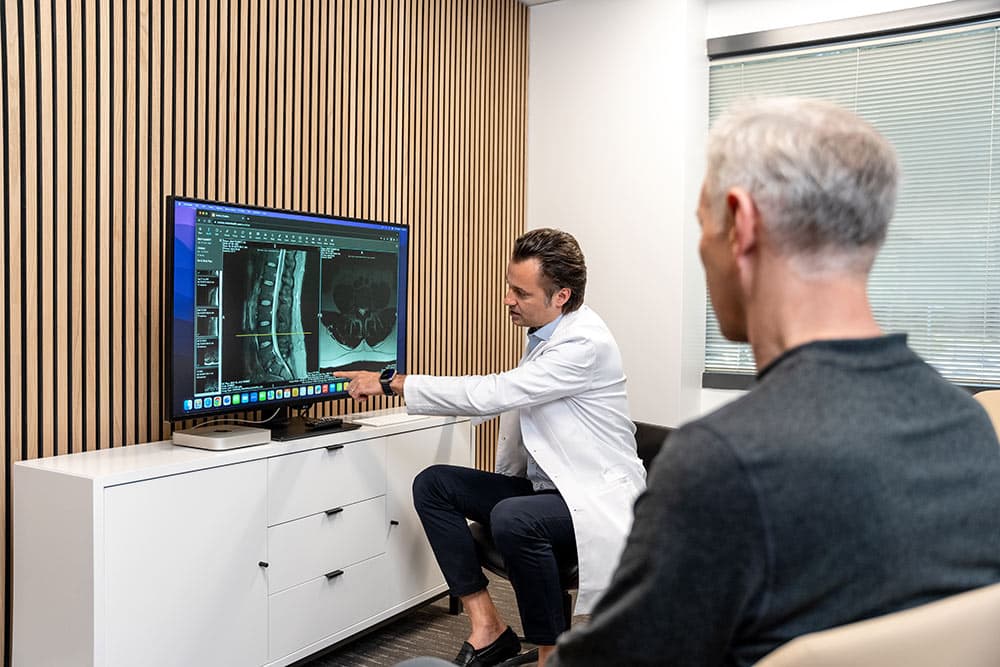
For pickleball enthusiasts experiencing spine or back issues, Dr. Luke Macyszyn Neurosurgery offers advanced, patient-focused care. As a board-certified neurosurgeon specializing in complex spine conditions, Dr. Luke Macyszyn delivers the highest level of expertise to help you return to play safely and stay active long-term.
Our pickleball injury expert, Dr. Luke Macyszyn, is proud to be part of Pickleball Doctors. Offering expert advice on injury prevention and performance optimization, the Pickleball Doctors, an elite group of doctors, are committed to keeping you on top of your game on the pickleball court.
Pickleball is a fun, fast-growing sport that keeps players active and engaged, but it can also place significant stress on the spine and back. From quick lunges and sudden rotations to repetitive bending and overhead movements, players of all ages may develop back injuries, herniated discs, or pinched nerves that interfere with both play and daily life.
At Dr. Luke Macyszyn Neurosurgery, your spine health is the priority. Dr. Macyszyn has high-level training and expertise to deliver advanced diagnostic insight and targeted treatment strategies tailored to each patient. Whether you’re an avid pickleball player or simply struggling with spine-related pain, his expertise ensures you receive individualized care designed to restore mobility and relieve discomfort.
Every athlete has unique goals, and recovery is about more than healing an injury—it’s about returning to the activities you love. Dr. Macyszyn works closely with you to identify the best surgical or nonsurgical solution for your specific condition, creating a plan that supports both long-term spine health and a safe return to the pickleball court.
With specialized training, extensive experience, and a personalized approach to spine care, Dr. Macyszyn delivers world-class spine care for those who refuse to let back pain keep them from the game they love.
Your Spine Specialist
Luke Macyszyn, MD, MA, FAANS, FACS
Dr. Macyszyn empowers efforts in making advanced treatments more accessible to patients. His lifelong passion for improving patient health and quality of life results in a distinctly personalized approach to care, placing a patients’ specific symptoms and goals at the forefront.
Pickleball requires more than quick reflexes—it demands strength, balance, and flexibility from your entire body. Without proper conditioning, the repeated twists, lunges, and overhead swings can place extra stress on your back and spine, increasing the risk of injury.
Whole-body training is one of the best ways to stay strong and injury-free on the court. Core stability, leg strength, and upper-body mobility all work together to support spinal health and improve athletic performance. By combining stretching, balance work, and targeted strength exercises, players can build resilience that not only protects the spine but also enhances their game.
At Dr. Luke Macyszyn Neurosurgery, prevention is as important as treatment. Dr. Macyszyn encourages players to adopt conditioning routines that prepare the whole body while safeguarding the back—helping athletes stay active, avoid setbacks, and keep enjoying pickleball without being sidelined by pain.
Exercises
Pickleball 10 to Win
Exercise 1
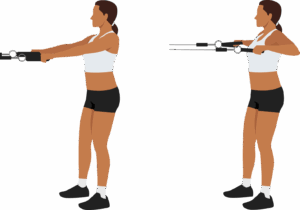
BEAR HUGS
Step 1. Stand straight or lie on your back and open up your arms, pulling your shoulders back to broaden your chest. Step 2. Bring your arms back in, wrapping them around your chest, and pat the back of your shoulders. Step 3. Repeat quickly 20 times.
For the Win: Do some resistance bear hugs. Hold a resistance band around your back. Then, reach your arms out in front of you like you are hugging someone. Hold for 3 seconds. Repeat 10 times.
Exercise 2
POGO HOPS
Step 1. Stand with your feet shoulder-width apart. Step 2. Bend your knees slightly, but keep your posture straight. Step 3. Keep your feet together and jump up and down in place. Step 4. Repeat for 30 seconds.
For the Win: Do some single-leg hops. Balance on one leg and hop in place for 30 seconds. Repeat while balancing on your other leg. For better agility training, use a line to hop over from left to right.
Exercise 3
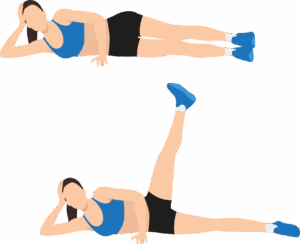
SIDE-LYING LEG LIFTS
Step 1. Lie on your side with your legs straight and one leg on top of the other. Step 2. Bend your knees slightly and move your top leg toward the sky or ceiling. Step 3. Lift your leg slowly and lower it slowly. Step 4. Repeat 10 times on each side.
For the Win: Try resistance leg lifts! While lying on your side, place a resistance band around your legs and above your knees while you complete your leg lifts. For more of a challenge, place the band around your ankles.
Exercise 4
SINGLE-LEG BALANCE
Step 1. Stand with your feet hip-width apart. Step 2. Lift one foot off the ground. If you need, hold your arms out to help you balance. Step 3. Hold this position for up to a minute or as long as you can. Step 4. Repeat on the other side.
For the Win: Do single-leg extensions. Stand on one foot. Lift your other leg, extending it behind you, in front of you, and off to the side. Center your leg before each extension. Repeat 15 times on each side.
Exercise 5
STANDING QUAD STRETCH
Step 1. Stand on one foot and pull the other behind you, holding the ankle. Step 2. If you need, hold onto something for balance. Step 3. Pull your heel toward your buttocks, and hold for 30 seconds. Step 4. Repeat on each side.
For the Win: Do kneeling quad stretches. Kneel on one knee with the opposite foot planted flat in front of you. Push your hips forward and hold for 30 seconds. Repeat for 3 sets on each side.
Exercise 6
ROWS
Step 1. Put a resistance band around a stable surface, like a tree or fence, holding the band in each hand. Step 2. Stand facing the band with your feet hip-width apart. Step 3. Pull the band toward you, squeezing your shoulder blades. Step 4. Return to your starting position. Step 5. Repeat 15 times.
For the Win: Do some bodyweight rows. Instead of resistance bands, use your body weight. Find a stable horizontal surface, such as a table or bar, and lie underneath it, grasping the surface firmly with both hands. Pull yourself up then lower yourself back down. Repeat 15 times.
Exercise 7
PLANKS
Step 1. Put your hands and knees on the ground, then extend your legs behind you. Step 2. Support your weight on your forearms and toes. Step 3. Keep your body straight from your head to your heels. Step 4. Hold this position as long as you can.
For the Win: Try side planks with resistance in your arms. Support your weight on one foot and forearm. Hold a resistance band in both hands, and extend your free arm toward the sky or ceiling. Repeat 10 times on each side.
Exercise 8
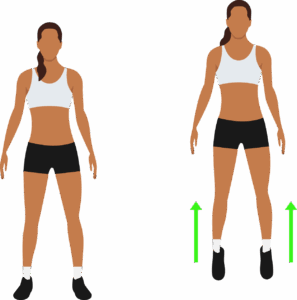
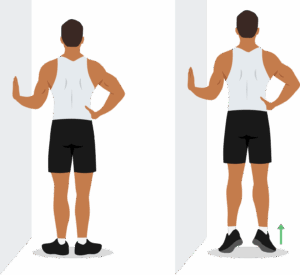
HEEL RAISES
Step 1. Stand with your feet shoulder-width apart. Step 2. Slowly lift your heels off the ground, rising up onto the balls of your feet. Step 3. Pause as you get to your tip-toe position, then lower your heels slowly back down to the ground. Step 4. Repeat 20 times.
For the Win: Try single-leg heel raises. Instead of using both feet, lift one foot off the ground while putting your weight on the other foot and lifting that heel up. Repeat 20 times on each side.
Exercise 9
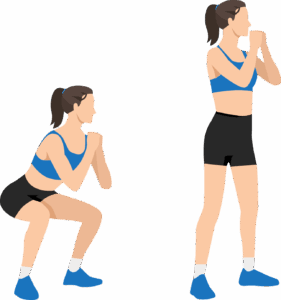
SQUATS
Step 1. Stand with your feet shoulder-width apart. Step 2. Lower your hips down and back as if you are sitting down in a chair. Step 3. Keep your weight on your heels. Step 4. Return to a standing position. Step 5. Repeat 10 times.
For the Win: Try single-leg squats. Instead of two feet down as you squat, lift one foot off the ground and extend it in front of you as you lower your hips and return to a standing position. Repeat 10 times on each side.
Exercise 10
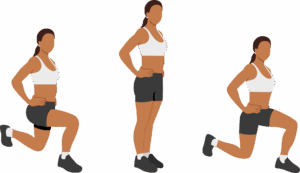
LUNGES
Step 1. Stand with feet hip-width apart. Step 2. Take a big step forward with one foot. Step 3. Lower your hips down until your front knee is bent at a 90-degree angle. Step 4. Keep your weight on your front heel. Step 5. Push off your front foot to return to a standing position. Step 6. Repeat 10 times on each side.
For the Win:Do backward and side lunges. For backward lunges, take a big step backward, lower, and push off your back foot to return to standing. For side lunges, take a step out to the side, lower yourself on that side, and push back up from that foot to return to standing.
Signs of Injury
Know When to See a Spine Specialist
Back or spine pain should never be ignored—especially when playing pickleball. Pushing through discomfort can worsen the problem and may even keep you off the court long-term.
At Dr. Luke Macyszyn Neurosurgery, the focus is on accurate diagnosis and advanced treatment to get you moving again safely. If you experience any of the following, it may be time to seek expert spine care:
A fall on the court followed by sharp or radiating pain in your back, neck, or legs
Sudden weakness, numbness, or tingling in the arms or legs after playing
Ongoing back pain that doesn’t improve with rest, stretching, or over-the-counter care
Discomfort or stiffness in the lower back when bending, twisting, or reaching for a shot
Neck or upper back pain while serving or swinging your paddle
Persistent pain in one area of the spine that interferes with daily activities or play
The dynamic nature of pickleball can sometimes worsen existing spine problems or trigger new injuries. Common conditions include:
Cervical strain
Compression fracture
Facet joint pain
Herniated disc
Lower back strain
Muscle spasms
Sciatica
Spinal stenosis
Spondylolisthesis
Spine Care
Specialized Spine Care for Pickleball Players
The best treatment is one that matches your goals—whether that means relieving pain, restoring movement, or returning to the pickleball court with confidence. At Dr. Luke Macyszyn Neurosurgery, care is focused on your unique needs, with expertise in diagnosing spine and back conditions that affect active individuals.
Whenever possible, Dr. Macyszyn recommends nonsurgical treatment options to manage pain and improve function. If surgery is the right path, he offers advanced, minimally invasive techniques as well as motion-preserving procedures such as cervical disc replacement—all designed to support a safe recovery and long-term spine health, so you can stay active in the game and in life.
Injuries & Treatment
Common Pickleball Spine Injuries & Treatments
At Dr. Luke Macyszyn Neurosurgery, each pickleball player receives care tailored to their individual needs and activity goals. Use the buttons below to learn more about common pickleball-related spine injuries and conditions and advanced treatments available.